Lush Life, written by Billy Strayhorn, is one of the richest harmonic landscapes in the jazz-standard repertoire. Its chord progression moves through an unusually wide range of tonal functions, tonicizations, chromatic relationships, and voice-leading connections while still maintaining a strong sense of harmonic direction.
In this analysis, we’ll look at the chords of Lush Life in two complementary ways: first by harmonic function, using Roman numerals to show what each chord is doing, and then by actual chord names, so you can connect the functional analysis directly to the progression.
The Harmonic Landscape of Lush Life
Strayhorn’s harmony stretches the boundaries of conventional tonal function without losing its sense of direction. Many of the chords in Lush Life sit just outside familiar categories such as secondary dominants, tritone substitutions, and modal borrowing, yet remain closely connected through the circle of fifths and smooth voice leading.
That is one reason the progression can look extraordinarily chromatic on paper while still sounding coherent.
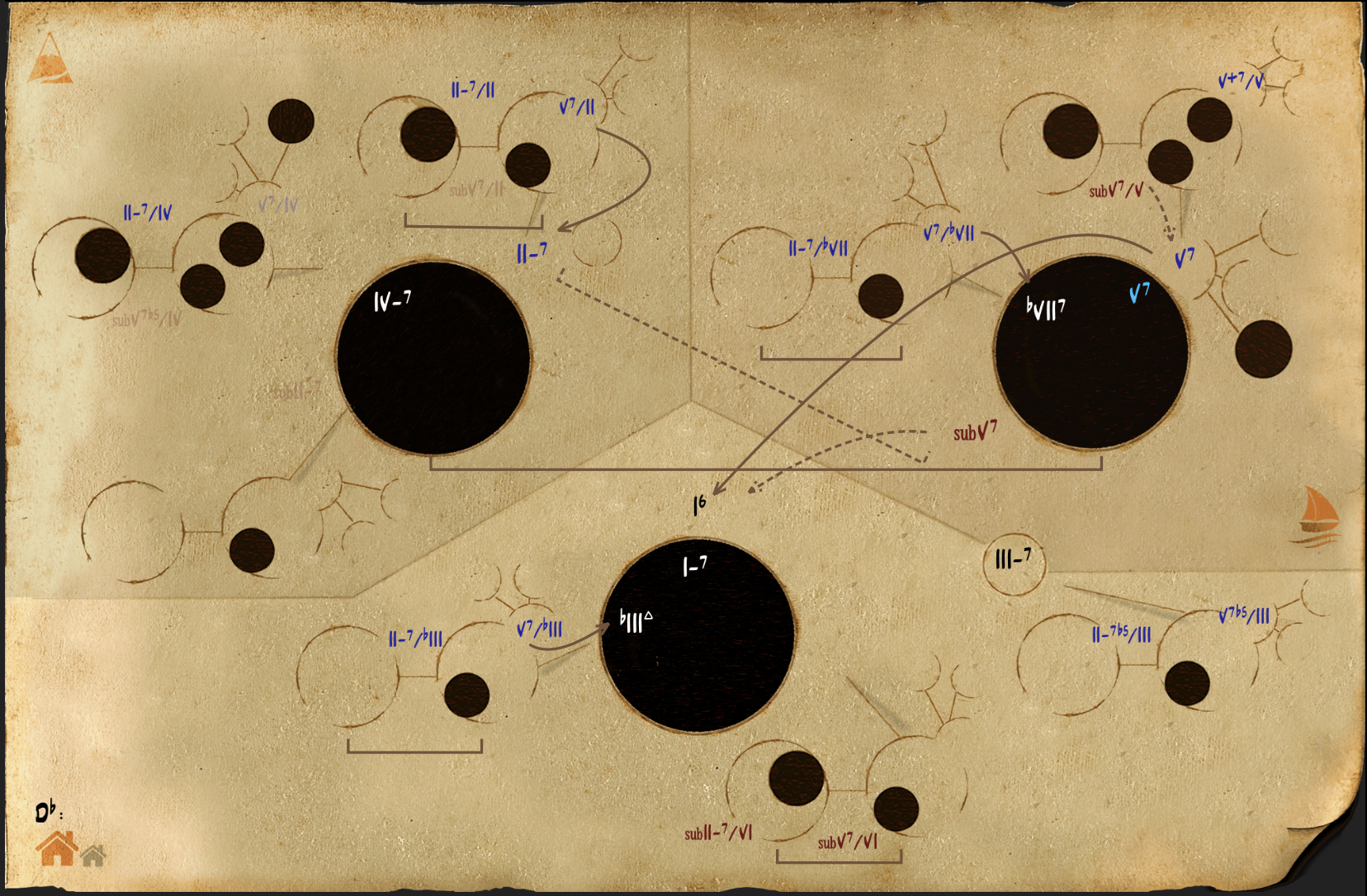
From Harmonic Function to the Actual Chords
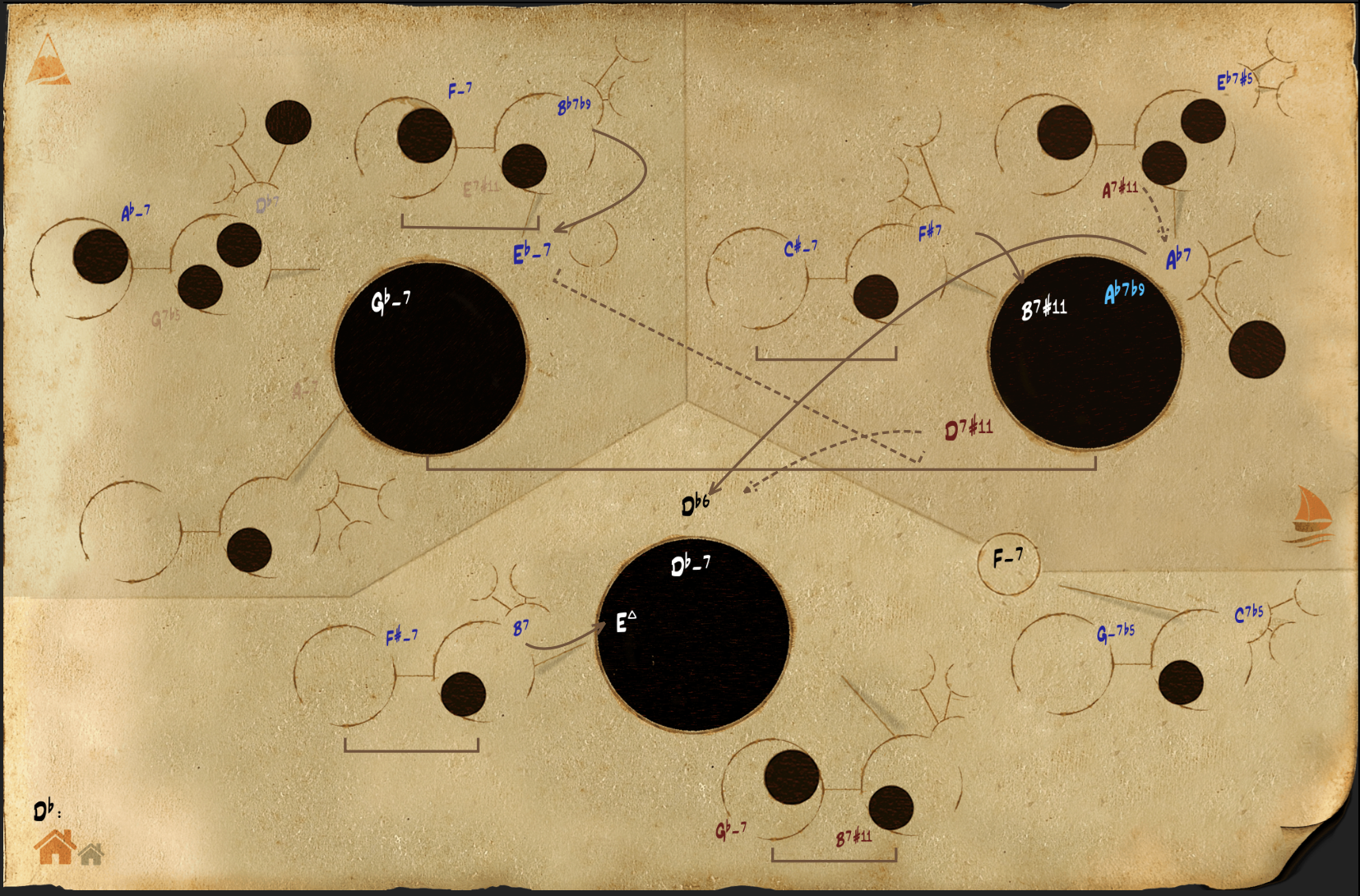
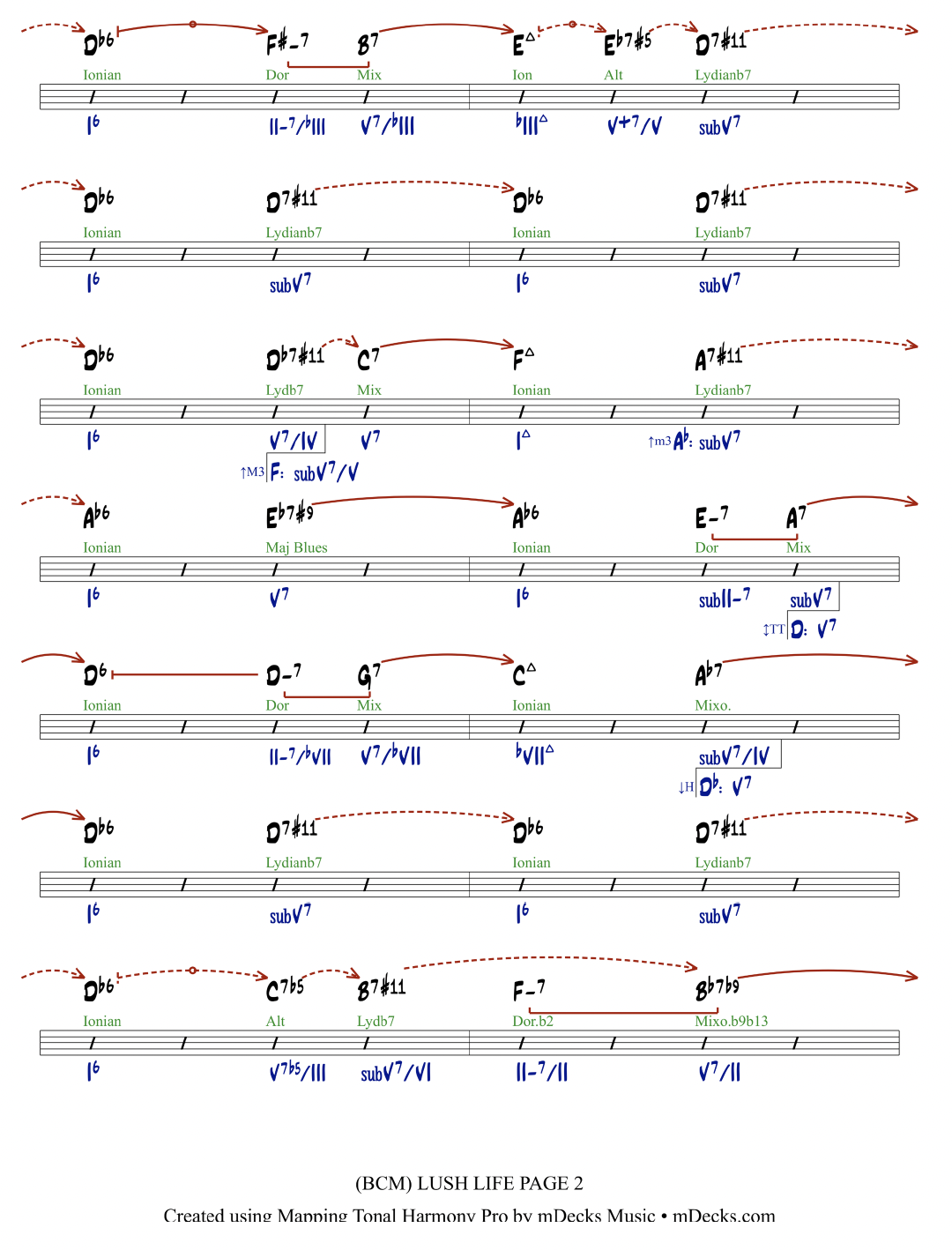
The functional map shows what the chords are doing. The chord-symbol map below shows which chords create those functions in Lush Life.
Looking at the two views together makes the progression easier to understand: instead of treating every unusual chord as an isolated event, we can see local ii–V relationships, tonicizations, substitute functions, chromatic approaches, and the voice-leading connections that tie the progression together.
Why Lush Life Still Sounds Tonal
I’ve been fascinated by Duke Ellington and Billy Strayhorn compositions since the first time I heard an Ellington album, about thirty years ago. Since then I greatly enjoyed their rich harmonies, rhythmic vocabulary and melodies that seem to be a perfect balance of sophisticated ideas with a practical, to-the point nature.
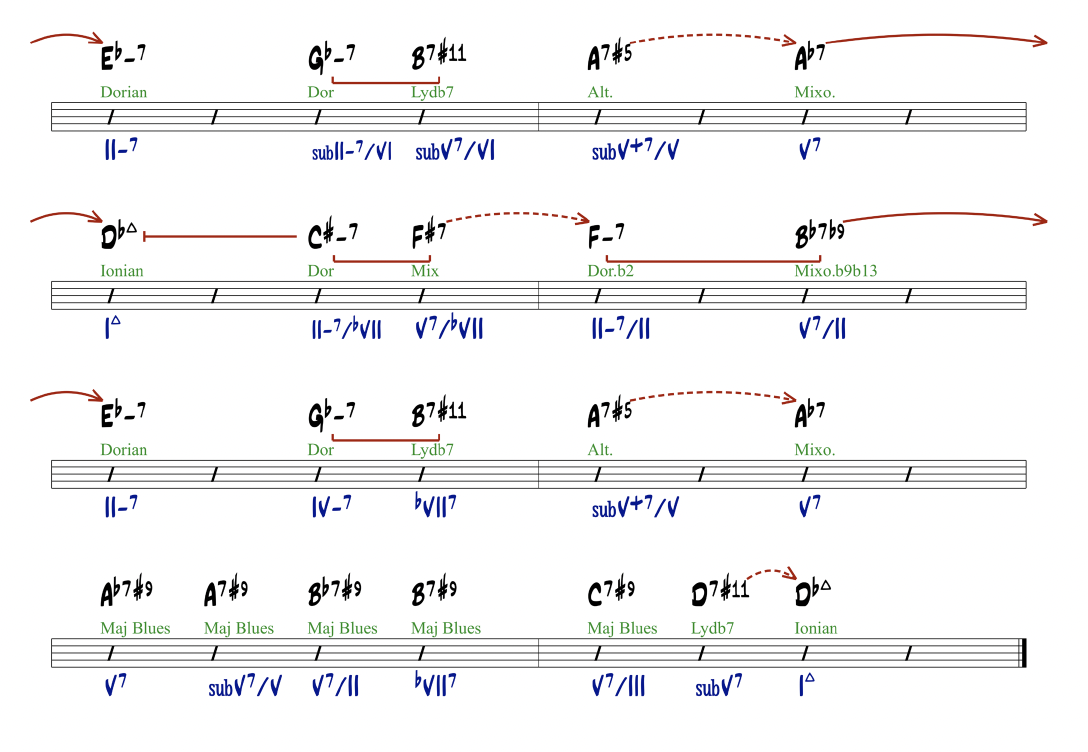
The analysis of many Ellington and Strayhorn tunes challenged some of my beliefs as they stretch the boundaries of tonal harmony. However I found most of these exuberant harmonic progressions seem to have something in common. Many times these chords, that at first sight seemed not to have a place in the collection of traditional harmonic functions, are border line tonal. They might not be in the realm of commonly used harmonic functions such as secondary dominants, sub V’s or borrowing from minor, but they are very close to them in the circle of fifths. Other times a chord is not exactly a diatonic chord in the key of the moment but they just have one or two chord tones displaced. Obviously voce leading played an important role in the choices made by the composers. For instance, on the second page bar 4, this bVIImaj7 function is paired with an Ionian chord-scale.
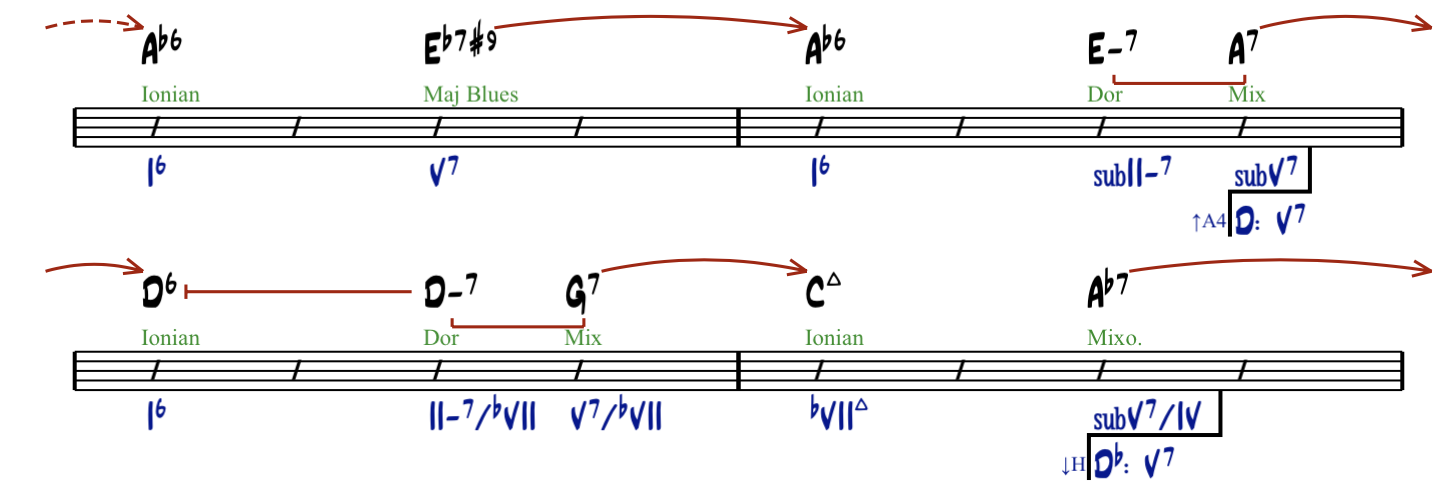
As I said earlier the analysis of these masters’ works challenged some of my convictions and forced the mDecks team to re-examine multiple harmonic functions in Mapping Tonal Harmony Pro. In most cases we ended up making some of the boundaries between tonal and non tonal harmony more flexible. We added options to the harmonic landscape in the app and made a wider range of options in the chord/chord-scale pairings. This enriched our knowledge, the app’s functionality and it’s ability to represent tonal harmony in a coherent, visual landscape that allowed all of us to gain better understanding of the sounds we so love.
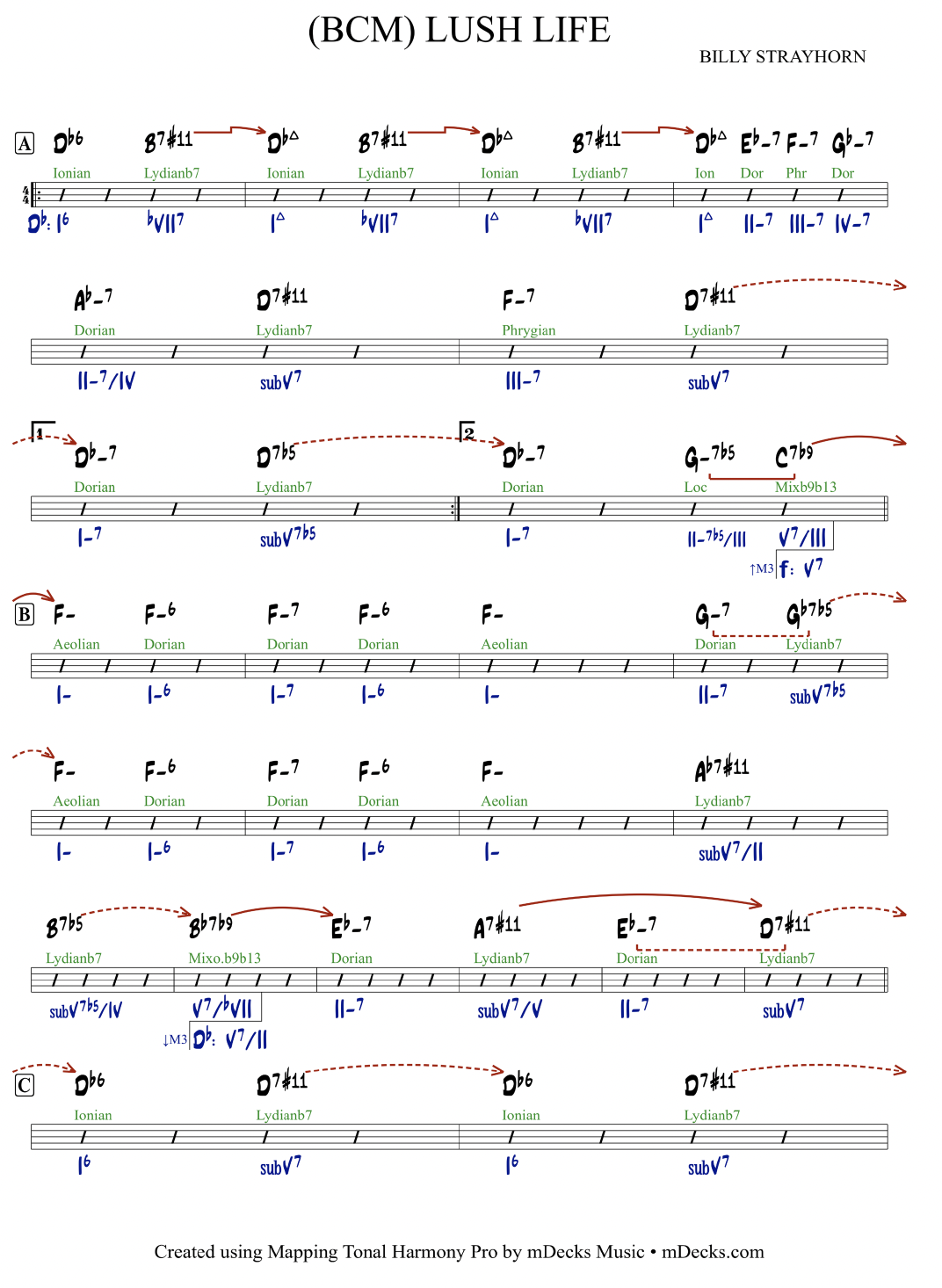
Here’s Lush Life with full harmonic analysis, chord-scales and arrows & brackets analysis.


Leave a Reply